
History has a peculiar habit of closing its own loops. On 18 July 1980, India established its sovereign capability to reach space when the state-run Indian Space Research Organisation (ISRO) launched the Rohini RS-1 satellite aboard the domestic SLV-3 rocket. Exactly forty-six years later, on the very same calendar date and from the exact same spaceport at Sriharikota, the country achieved an identical structural leap, this time entirely within the private sector. The successful Vikram-1 rocket launch on 18 July 2026 marks the definitive arrival of India’s commercial space apparatus, establishing the nation as only the third on Earth, alongside the United States and China, to build, own, and operate domestic private orbital launch vehicles.
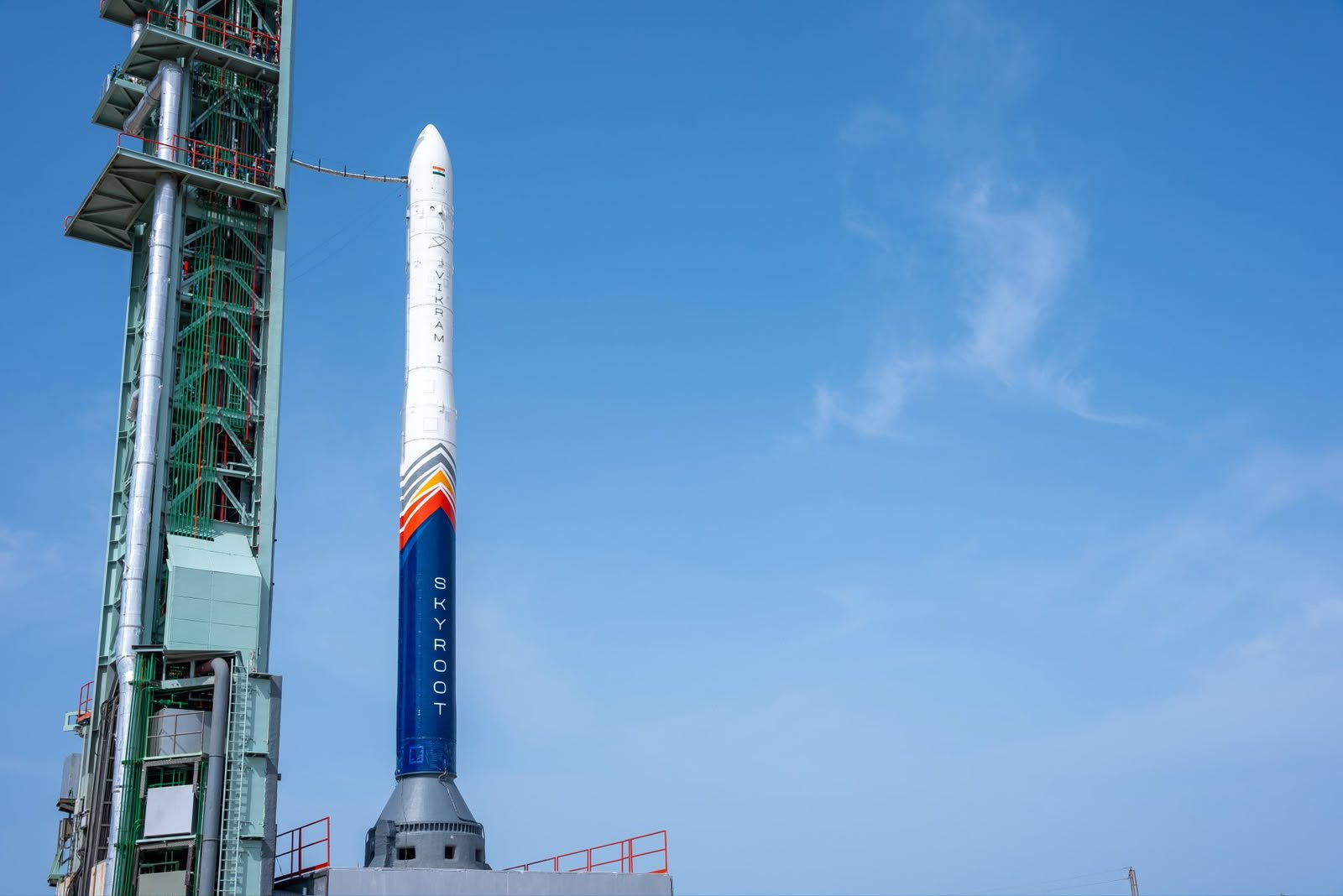
Why does an anniversary forty-six years in the making carry such weight? The answer lies in the institutional shift of who controls the fire. While Skyroot Aerospace’s successful suborbital test in 2022 demonstrated raw engineering promise, achieving a stable, sustained Low Earth Orbit (LEO) requires an entirely different order of magnitude in guidance, thermal shielding, and precision velocity. Developed by a deep-tech startup whose core engineering team maintains an average age of just 28, the seven-storey vehicle executed its flight with textbook precision, delivering five distinct payloads into a 450-kilometre orbit.
Why the Vikram-1 rocket launch matters for global commerce
For decades, sovereign space programmes operated under a tightly guarded state monopoly. Rocketry was viewed as an expensive, high-risk geopolitical flex, affordable only to governments or heavily subsidised defence conglomerates. The arrival of an operational private vehicle in India disrupts this legacy dynamic. By utilising an ultra-lightweight, all-carbon-composite structural frame and advanced 3D-printed liquid engines in its upper stage, the vehicle cuts down the immense manufacturing overheads traditionally associated with metal fabrication.
This technical efficiency translates directly into a commercial advantage. The global small-satellite market has long suffered from a severe supply bottleneck. Startups, climate researchers, and logistics firms looking to deploy nanosatellites are routinely forced to wait months, sometimes years, to hitch a ride as secondary cargo on massive state rockets. The emergence of agile, private alternatives offers a dedicated "cab service to space." Satellites can now be positioned in bespoke orbital inclinations on demand, fundamentally altering the economics of global space logistics.
How India opened its space sector to private players
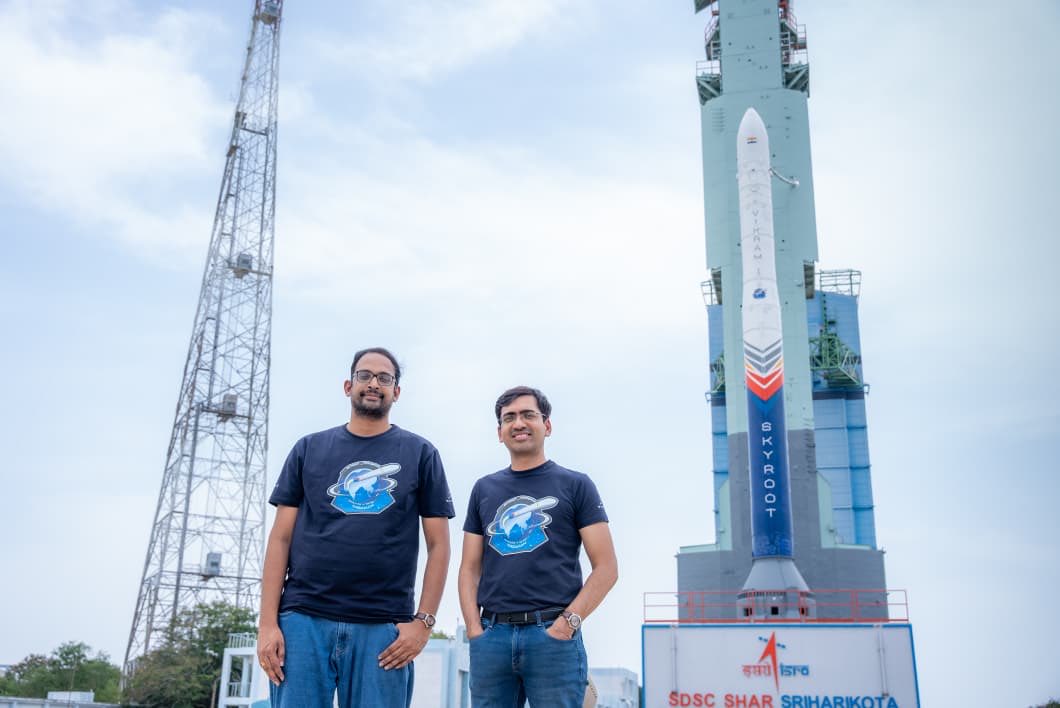
This milestone did not occur in a vacuum. It is the direct consequence of a calculated, deliberate policy pivot. Recognising that ISRO could not single-handedly absorb the massive global demand for commercial satellite deployment while simultaneously executing deep-space scientific missions, New Delhi initiated sweeping structural reforms. The codification of the Indian Space Policy in 2023 effectively dismantled the state's absolute monopoly, transforming ISRO from a sole operator into an institutional enabler.
By setting up IN-SPACe (the Indian National Space Promotion and Authorisation Centre), the government created a single-window clearance mechanism that allowed private entities to access state-of-the-art launchpads, testing facilities, and historical data matrices. Crucially, the policy provided legal clarity on ownership, foreign direct investment, and asset liability. Without this regulatory architecture, private capital would have remained on the sidelines. Instead, the reforms triggered a profound influx of venture funding, transforming India into a hyper-competitive incubator for space-tech talent.
Which Indian space-tech startups are leading the race?
The landscape extending beyond Skyroot Aerospace is expanding rapidly, characterised by a diverse cluster of startups tackling separate components of the orbital supply chain.
Agnikul Cosmos: Based out of Chennai, this startup is preparing for subsequent orbital iterations of its Agnibaan rocket. Their core differentiation lies in the development of single-piece, completely 3D-printed semi-cryogenic engines, manufactured entirely in-house within a matter of days.
EtherealX: Targeting the medium-lift market, this venture is focusing heavily on absolute reusability. By designing vehicles capable of returning to Earth for refurbishment, they aim to drive the per-kilogram launch cost down to unprecedented depths.
Astrobase: Operating at the fundamental propulsion layer, this company is developing highly complex, full-flow staged combustion engines designed to provide maximum specific impulse and efficiency for heavy-duty industrial payloads.
The payload composition of the recent launch itself reflects this collaborative ecosystem. Alongside Skyroot's internal flight-data tracking asset, the rocket deployed SOLARAS S3, an indigenous Earth-observation nanosatellite built by Grahaa Space, and Embrace, a robotic capture arm designed by Cosmoserve to actively trap and mitigate orbital debris.
What is the way forward for the domestic space industry?
Maintaining a permanent seat at the global commercial table requires transitioning from isolated technology demonstrations to a high-frequency, reliable launch cadence. A single successful orbital insertion establishes engineering capability; it does not guarantee a profitable business model. The immediate challenge for the private sector is operational scalability.
Sceptics will rightly point out the immense mortality rate within the global aerospace startup ecosystem. Only recently, Japan's Space One suffered catastrophic launch anomalies, highlighting that space remains an inherently unforgiving environment. To survive, Indian firms must navigate the complex transition from prototyping to mass manufacturing while maintaining rigorous quality control across an indigenous component supply chain.
Furthermore, capital depth remains a critical variable. While early-stage venture funding has been robust, the transition to building medium- and heavy-lift launch vehicles demands substantial capital expenditures that require patient, institutional backing. Should these startups successfully clear the capitalisation hurdle, the geopolitical implications are stark. India is no longer merely an outsourcing hub for low-cost software development or basic satellite assembly. It possesses a complete, end-to-end commercial aerospace cluster capable of challenging established Western launch providers on price, speed, and technical sophistication. The ceiling for Indian engineering has officially moved from the atmosphere to the stars.